

Come to Passau already on Tuesday (September 1) to take part in our Pre-Conference Program:
- Two workshops offered by our Gold Sponsors Gurobi and Hexaly. These are open to all conference attendees.
- The PhD Program Dokt!OR aimed specifically at PhD students.
You can find more information about both programs below:
PhD Program Dokt!OR
Dokt!OR offers PhD students a unique opportunity to gain inspiration and practical insights to advance both their research and future careers in Operations Research. This year’s program brings together five sessions covering research and presentation skills, emerging connections between AI and OR, and diverse career paths within the OR community.
Join us on Tuesday, September 1, starting at 09:30, in Audimax (AM HS10).
Program
09:30-11:00 |  Workshop: Giving Better Presentations Christina Büsing The workshop Giving Better Presentations introduces key principles of effective scientific communication. Through an Euler presentation, participants first experience a deliberately poor presentation and then a well-designed version of the same content, highlighting common pitfalls and best practices. The workshop covers techniques for creating a strong opening, maintaining audience attention, using slides effectively, and improving delivery through body language, interaction, and clear structure. Practical exercises and discussions provide participants with concrete tools to enhance their own presentation skills and communicate their ideas more effectively. |
11:15-12:15 |  Workshop: Making an Impact Clemens Thielen This workshop will explore how Operations Research can create impact in practice. It will focus on how OR models, analytical methods, and decision-support approaches can inform and improve real-world decisions, tools, and processes. Based on examples and experiences from applied research projects, the workshop will address factors that can enable or hinder practical impact, such as problem selection, stakeholder involvement, model realism, usability, trust, and communication. It will also consider the relation between scientific depth and practical relevance, and why technically strong research does not automatically lead to practical adoption. Interactive elements will help participants reflect on the practical impact potential of their own research. |
Lunch Break |
|
13:30-14:30 |  Tutorial: Automatic Heuristic Discovery: From DRL to LLMs Kevin Tierney In this tutorial, I will discuss the topic of automatic heuristic discovery, which is the task of creating custom heuristics to solve optimization problems. Starting from a deep reinforcement learning (DRL) perspective, I will cover the main mechanisms for directly predicting decisions of routing and scheduling problems. Following a look at DRL, I will turn to large language models (LLMs), which can also automatically design and code solution methods for optimization problems. The methods I will show match or beat state-of-the-art, human-designed heuristics on challenging routing and scheduling problems. The tutorial will end with ideas for integrating these methods into PhD student’s work. |
14:45-16:00 | 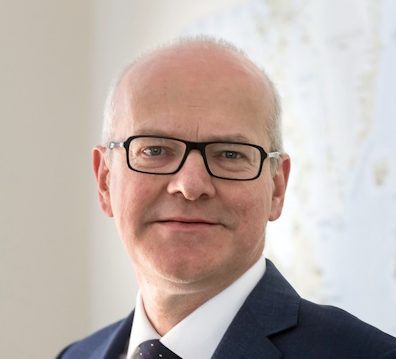 Master Class: Mixed Integer Optimization with Constraint Learning Dick den Hertog Many real-world optimization problems involve objectives and constraints that cannot be explicitly specified by mathematical formulas. For example, the effectiveness of a humanitarian intervention, the feasibility of a logistics plan, or the acceptability of a medical treatment may depend on complex relationships that are only partially understood but for which historical data are available. This raises a fundamental question: how can we optimize decisions when the optimization model itself must be learned from data? |
Coffee Break |
|
16:30-18:00 | Panel Discussion: Careers in OR Panelists: Christina Büsing, Dick den Hertog, Frauke Liers, Sonja Mars, Nikolas Stott, Clemens Thielen Moderation: Tobias Harks, Dorothee Henke Join us for an interactive session that is about your future! What pathways are there for a career in Operations Research, either in academia or in industry? Will we still need OR experts in the era of AI? Our panel of experts shed light on their individual experiences and take any questions you have. |

Sponsored Pre-Conference Workshops

„Modeling and Solving Routing Problems with Hexaly Studio“Speaker: Léa BlaiseTime: Tuesday, September 1, 13:15 – 14:30Room: HS9 (AM)
Abstract: Hexaly Optimizer is a next-generation mathematical optimization solver that extends the traditional Mixed-Integer Programming (MIP) paradigm with a richer modeling framework. Alongside classical algebraic formulations, it supports native combinatorial constructs, nonlinear expressions, and black-box optimization, enabling users to express complex optimization problems in a compact and natural way. By preserving high-level problem structure, Hexaly automatically leverages advanced algorithmic techniques, including decomposition methods, column generation, branch-price-and-cut, and decision diagrams. As a result, it delivers state-of-the-art performance across challenging optimization domains such as routing, scheduling, packing, simulation-based optimization, machine-learning-driven decision problems, and more. |

„Smarter Modeling with Gurobipy“Speaker: Robert LuceTime: Tuesday, September 1, 14:45 – 16:00Room: HS9 (AM)Abstract: This hands-on workshop explores the powerful capabilities of gurobipy, Gurobi’s Python interface, with a focus on best practices and comparative analysis of different modeling paradigms. Participants will gain practical insights into different modeling flavors:
|