



Plenary Speakers
Wednesday 9:00-10:00 HS10 (AM) |  Optimization for a Better World Dick den Hertog University of Amsterdam This keynote explores the transformative role of optimization in helping non-governmental organizations (NGOs) and non-profit organizations (NPOs) accelerate progress toward the United Nations Sustainable Development Goals (SDGs). Through the work of the Analytics for a Better World Institute, cutting-edge optimization methods are developed and applied to address some of society’s most pressing humanitarian and environmental challenges. Drawing on real-world collaborations with NGOs and NPOs, the keynote will demonstrate how optimization can substantially enhance social impact. One featured example is a collaboration with The Ocean Cleanup, where advanced optimization models are used to determine how cleanup vessels should be deployed and routed to maximize the removal of plastic from the world’s oceans, thereby increasing the effectiveness of large-scale efforts to combat marine pollution. The keynote will also present a range of projects that use geospatial optimization to improve access to healthcare and other essential services. These include optimizing the locations of primary healthcare facilities in Timor-Leste, determining the optimal placement of stroke centers in Vietnam, planning COVID-19 testing centers in Nepal, and identifying suitable locations for water wells in Sudan. These initiatives have been conducted in partnership with organizations such as the World Bank, the World Health Organization, Amref Health Africa, and the American Red Cross. Beyond showcasing the societal impact of these applications, the keynote will discuss the novel methodological and computational challenges they have generated. Many of these challenges remain open research questions, creating exciting opportunities for future advances in optimization and analytics for social good. |
Thursday 10:30-11:30 HS10 (AM) |  Learning to Allocate Scarce Resources: Balancing Efficiency, Fairness, and Transparency from Real-World Data Phebe Vayanos University of Southern California Motivated by collaborations with homelessness service providers, we study how causal inference, machine learning, and optimization can support high-stakes decisions involving scarce resources. In the first part of this talk, I focus on the allocation of scarce interventions such as housing to individuals experiencing homelessness. Using observational data collected in deployment, we develop a framework that learns simple, interpretable waitlist-based policies that maximize long-run outcomes while accounting for resource constraints and fairness considerations. Empirical results from a collaboration with the Los Angeles Homeless Services Authority show that our policies increase rates of exit from homelessness by 5.16% relative to current practice, while fairness constraints can often be incorporated at little cost to efficiency. In the second part of the talk, I discuss the design of risk assessment tools used to prioritize individuals for scarce interventions. In collaboration with the Missouri Balance of State Continuum of Care, we are developing risk scores that balance predictive accuracy, fairness, and transparency while remaining aligned with community values and operational needs. Our work combines machine learning, optimization, and extensive stakeholder engagement to evaluate alternative models and their associated trade-offs. Interestingly, community stakeholders ultimately preferred a substantially more interpretable risk score despite a non-negligible reduction in predictive performance. Determining when such trade-offs are worthwhile requires direct engagement with the communities affected by these systems. Together, these projects illustrate a broader vision for designing human-centered decision-support systems that combine prediction and optimization to allocate scarce resources efficiently, fairly, and transparently in high-stakes social service settings. |
Friday 11:45-12:45 HS10 (AM) | 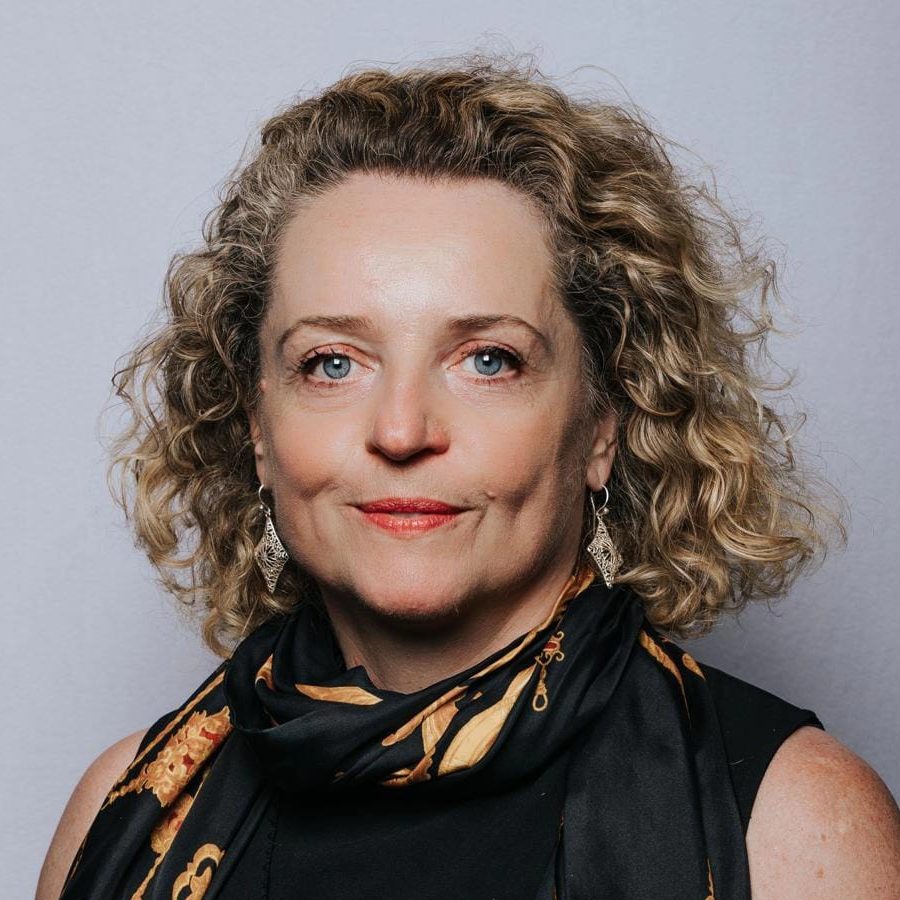 Modeling Fairness Through the Lenses of Ordered and Bilevel Optimization Ivana Ljubić ESSEC Business School Fairness has become an increasingly important consideration in contemporary societies, which are marked by growing economic and social inequalities. Consequently, policymakers and decision-makers are placing greater emphasis on incorporating fairness considerations into their decision-making processes. In this talk, we establish a connection between fairness modeling in optimization problems and bilevel optimization. We present a unifying and flexible modeling framework based on the principles of ordered optimization that captures a broad class of fairness measures proposed in the literature. These include both linear and nonlinear notions of fairness, such as the range, the Gini index, least absolute deviations, least squares deviations, and several others. Many of these practically relevant fairness measures are inherently non-monotone, which necessitates the imposition of appropriate optimality conditions. This observation naturally leads to a bilevel optimization perspective. To illustrate the practical implications of the proposed framework, we consider its application to vehicle routing problems, highlighting how bilevel optimization can be leveraged to model and solve fairness-aware optimization problems in real-world settings. This presentation is based on joint work with Justo Puerto and Alberto Torrejon. |
Semiplenary Speakers
Wednesday 15:00-16:00 HS10 (AM) |  Learning, Games, and Algorithmic Markets Martin Bichler Technical University of Munich While OR has made significant progress in solving optimization problems, we still know comparatively little about solving equilibrium problems. Recent algorithmic developments have shown that learning algorithms often find equilibrium in important classes of games. This is not only relevant to equilibrium computation, but also provides a model for learning agents in automated markets such as display advertising auctions or price competition on online retail platforms. Such markets are still not well understood theoretically. This talk provides a brief overview of mathematical concepts that help us understand when and why learning algorithms converge to a Nash equilibrium in games, and when this is not the case. |
Wednesday 15:00-16:00 HS13 (IM) | 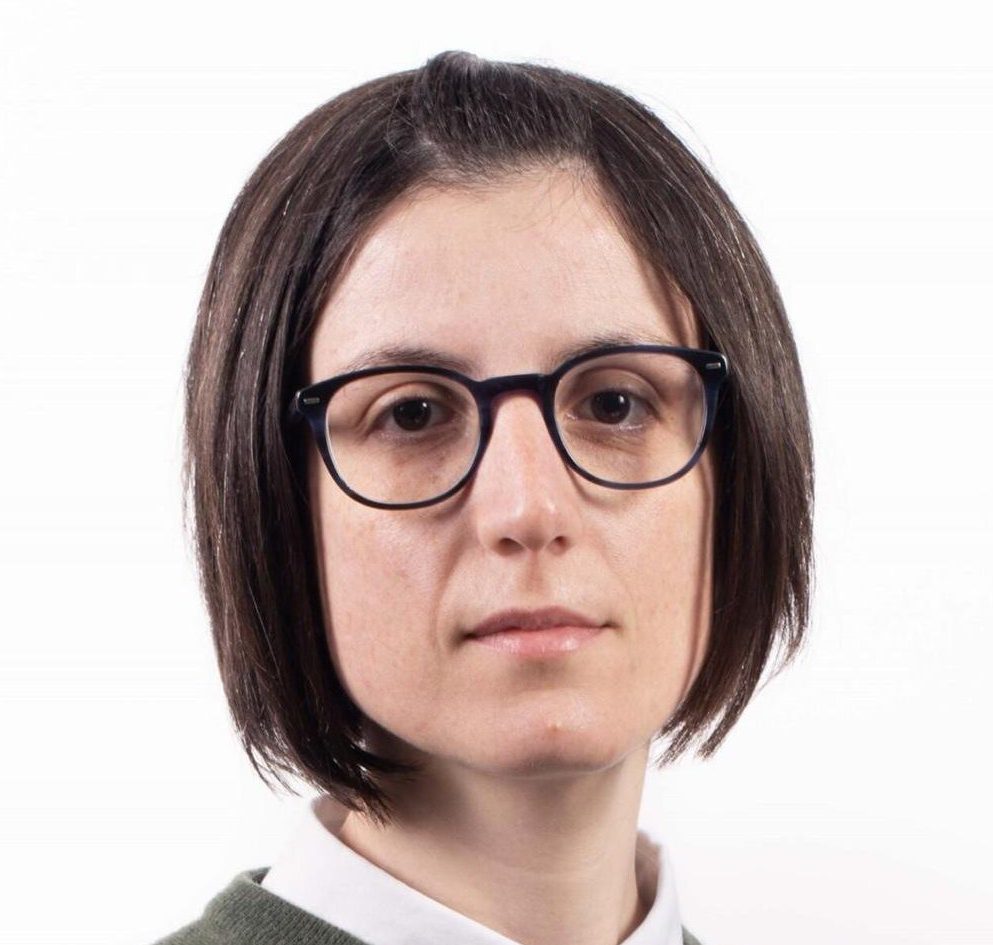 Decision Diagrams for Discrete Decision-Making Under Uncertainty and Beyond Merve Bodur University of Edinburgh Sequential decision-making under uncertainty arises in many operations research applications. These problems become particularly challenging when recourse actions are binary or integer, and scalable solution methods remain limited in scope. This motivates approaches that leverage the combinatorial structure of discrete recourse. In this talk, we will present how decision diagrams (DDs) can represent relevant combinatorial substructures in two-stage stochastic programming and adaptive robust optimization. For stochastic programs, we will show how DDs can convexify discrete recourse representations and make the problem amenable to Benders decomposition, including risk-averse extensions. For adaptive robust binary optimization, we will present DD-based network-flow formulations that provide exact models, size-controlled approximations, and high-quality primal and dual bounds. We will further touch on learning-guided DD construction for stronger relaxations. We will also briefly discuss extensions beyond uncertainty, including multiobjective discrete optimization for efficient Pareto frontier enumeration and column generation settings where DDs support pricing. |
Wednesday 15:00-16:00 HS5 (WIWI) |  Frank-Wolfe Beyond Polytopes: Convergence on Non-Polyhedral Sets Sebastian Pokutta Technische Universität Berlin Frank-Wolfe methods are a classical projection-free approach to constrained optimization and are particularly attractive when linear minimization oracles are significantly cheaper than projections. Much of the classical theory and intuition has been developed for polyhedral domains, where active-set structure and sparsity play a central role. In many applications, however, the feasible region is not polyhedral but curved, for example a Euclidean ball, a spectrahedron, or a strongly convex set. This raises a natural question: how does the geometry of a non-polyhedral domain change the convergence behavior of Frank-Wolfe? In this talk, I will discuss recent progress on Frank-Wolfe convergence beyond polytopes, with a particular focus on uniformly convex sets. After briefly reviewing the geometric picture and what is known about improved rates under additional assumptions, I will focus on a recent constructive lower bound, obtained through an approach that is rather unusual for lower-bound arguments, showing that even when both the objective and the constraint set are smooth and strongly convex, the classical O(1/sqrt(ε)) guarantee is tight in general. In particular, this settles, roughly a decade after the 2015 Garber-Hazan upper bound, the question of whether strong convexity of the feasible set alone can guarantee a uniformly faster rate. I will conclude by complementing this picture with a surprising new result. |
Thursday 16:00-17:00 HS10 (AM) |  OR and Its Vital Role in Addressing Technology and Policy Challenges to Decarbonize Electricity Systems Ramteen Sioshansi Carnegie Mellon University The electricity industry and policymakers are grappling with the challenge of decarbonizing electricity systems. Decarbonization will require major changes in how electricity systems are planned and operated. Moreover, policy and market reforms will be needed to ease the transition. This talk surveys these changes and challenges and dispels some common misconceptions about decarbonization. Moreover, the important role of operations research in facilitating this transition is discussed. |
Thursday 16:00-17:00 HS5 (WIWI) |  Diversity of Solutions within Combinatorial Optimization Frits Spieksma Eindhoven University of Technology We describe a framework for quantifying the trade-off between diversity of solutions on the one hand, and their quality on the other hand. For this context, we develop a measure that we call the Price of Diversity (PoD). We apply this concept to a number of problems. In particular, we investigate the Traveling Salesperson Problem with the triangle inequality, and show how the requirement to generate multiple diverse solutions influences tour quality. Specifically, we consider the problem of finding two edge-disjoint tours while minimizing the length of the longer tour. For this setting, we derive tight results establishing the PoD for this problem. (Joint work with Andres Lopez Martinez and Mark de Berg) |
Thursday 16:00-17:00 HS13 (IM) |  Integer programming and bounded subdeterminants Stefan Weltge Technical University of Munich Identifying parameters that capture the difficulty of integer programs is a central theme in the study of integer programming. One such parameter is the largest absolute value of any subdeterminant of the constraint matrix. In this talk, we explore how bounding this parameter influences the complexity of integer programs. We survey several recent results and discuss intriguing open questions in this area. |
Friday 10:30-11:30 HS13 (IM) |  Applied Statistics and Operations Research – Two Sides of the same Coin ? ! Göran Kauermann Ludwig-Maximilians-Universität München If one consults modern search engines for a brief definition of Operations Research, the answer is typically something along the lines of: “Operations Research is the use of mathematical models, statistical analysis, and optimization techniques to support better decision-making and improve the efficient use of resources”. Statistical analysis is mentioned as one of its tools, alongside mathematics and optimization. However, “Statistical Analysis”, or better “Applied Statistics” today goes much deeper into the subject matter, also with the aim of making “better decision-making.” In this respect, Operations Research and Applied Statistics pursue similar, if not partly identical, objectives. Yet the approaches of the two disciplines have different roots and histories. This talk highlights the statistical perspective and illustrates how questions can be addressed using a statistical approach. Several practical examples are presented. Specifically, we consider the estimation of price elasticities and the optimization of renewable energy systems, the latter using South Africa as a case study. The central message is that, for concrete and complex problems, an interdisciplinary approach appears to be the most successful. In this sense, the coin has more than two sides, and each side both can and should be examined. |
Friday 10:30-11:30 HS9 (AM) |  Data-Driven Optimization in Humanitarian Supply Chains: An Application to Madagascar Marie-Ève Rancourt HEC Montréal This presentation explores how data-driven optimization can support decision-making in humanitarian supply chains, with a focus on the specific challenges that arise in this context. Decision problems are often ill-defined and must be formulated in data-scarce, uncertain, and resource-constrained environments. In applied research, data collection and processing play a central role, not only in parametrizing mathematical models, but also in shaping relevant and practically meaningful problems and research questions. The presentation will discuss the main features that need to be positioned and clarified when modeling and solving optimization problems related to humanitarian operations. The proposed approach to problem formulation follows a bottom-up research design, starting from operational challenges encountered by humanitarian organizations in the field and moving toward optimization-based solution approaches. A detailed case study in Madagascar illustrates this approach in the context of anticipatory stock repositioning for cyclone response. We develop a dynamic framework that combines a regression model to predict demand from cyclone forecasts and vulnerability indicators with a two-stage stochastic optimization model to guide repositioning decisions. The results show that anticipatory repositioning can reduce response time by up to 50% compared to a wait-and-see strategy, which remains a common practice. |
Friday 10:30-11:30 HS10 (AM) |  Large Language Models in the Optimization Loop Stefan Szeider TU Wien Large Language Models (LLMs) have reshaped natural language processing, but their role in combinatorial optimization and constraint solving is only beginning to take shape. In this talk, I argue that LLMs are most useful not as solvers in their own right, since they cannot guarantee optimality or even feasibility, but as collaborators for the exact solvers we already trust. I illustrate three roles an LLM can play across the optimization workflow. First, as a modeler: the MCP Solver lets an LLM translate problems stated in plain English into encodings for constraint programming, SAT, MaxSAT, and SMT, editing the model incrementally as an agent. Second, as a search guide: LLM-generated streamlining constraints steer solvers toward promising regions of the search space. They cut runtimes sharply and set new record values for spatially balanced Latin rectangles. Third, as an algorithm selector: pretrained text embeddings replace hand-crafted instance features, beating classical feature-based selection on 10 of 11 benchmark scenarios with no domain-specific engineering. The thread connecting all three is neurosymbolic: language models supply breadth and creativity, exact solvers supply rigor and guarantees, and the combination outperforms either alone. |