


Dick den Hertog is Professor of Operations Research at the University of Amsterdam. His research spans multiple areas of prescriptive analytics, with a focus on linear and nonlinear optimization. In recent years, robust optimization has become his primary research interest, complemented by emerging work on the intersection of optimization and machine learning. Alongside his theoretical contributions, he is committed to real-world applications — particularly those with meaningful societal impact.
In anticipation of Dick’s keynote talk at OR 2026, organizing committee member Ralf Kellner asked him some questions about his research and his view on the field of operations research in general:
How did you originally come to the field of operations research? What is your background, and what kept your interest—how did you get to where you are today professionally?
That goes back to my master’s degree. I had to choose a thesis topic—my master’s was in general mathematics—and one of the options was in operations research, specifically about interior point methods. That was around 1988. I chose that topic, supervised by Professor Kees Roos in Delft, liked it a lot, and continued with a PhD in the same area.
In more recent years, what types of applications of operations research are you most interested and excited about?
It may help to mention that after my PhD I had a rather unusual career: I went into industry, working for a consultancy company in optimization and OR, on applications for many companies including Philips. In 2000 I returned to academia. Nowadays my passion is to apply optimization to NGOs and non-profit organizations—the World Food Programme, the Ocean Cleanup, the World Health Organization, the World Bank, and others. We see enormous potential for analytics, and for optimization in particular, in these organizations, and I want to help them exploit it, because I believe they are often not yet aware of it. That is also what I plan to discuss during my plenary talk.
What brought you to that direction? For me personally, I sometimes find it difficult to reconcile my ethical standards with the purely commercial financial world. Is there also a moral or ethical compass that motivates you toward this broader societal focus?
Without suggesting that working for commercial companies is wrong—it certainly is not—a key turning point was reading a book called Excellence Without a Soul by a former Harvard dean. It was a critique of Harvard’s educational system, specifically the absence of a sense of purpose in education. That book influenced and inspired me deeply. From that point I decided to work on applications with greater societal purpose, to use those applications in my teaching, and to encourage students to write their theses on such topics. So yes, there is a moral dimension to it. My passion now is to apply the powerful methods we have developed—which are not yet being exploited—in the service of NGOs and NPOs.
How do you experience the gap between academic models and practical application? In my own work in finance, I found that real-world constraints often forced heavy simplification. Is it the same in operations research, or can you apply methods more directly?
Honestly, I am consistently surprised by how directly applicable optimization is across the many projects I have worked on—perhaps tens or hundreds by now. There is an art to modeling a practical decision problem: capturing the core without making it too simple or too complex. But time and again I find that a large project—say, for the World Food Programme—results in a model that fits on a single slide and yet captures the essence of the problem. That is the power of mathematics. And with that model, they can now feed millions more people. The same holds for the Ocean Cleanup. In other projects we also develop genuinely advanced methods. But the alignment between clean mathematical models and real-world impact is consistently striking.
How do you distribute your time across the different phases of a project?
Roughly half my time goes to applied projects and the other half to more theoretical work. Within projects I always work together with students—master’s, executive, and PhD students. We typically work through intermediaries rather than directly with communities; for example, through the World Bank, which has people on the ground. That allows us to focus more sharply on the mathematical side. Within a project itself, probably 50–60% of effort is spent on discussions—understanding the real problem and how the solution will actually be used.
Do you see a role for large language models in democratizing access to optimization—allowing non-specialists to formulate and solve problems?
Yes—I believe LLMs will shift things considerably. Currently, you need to be an optimization expert for these kinds of applications. In the future I expect that will change, and that is also my aim for the NGO and NPO world: to lower the barrier. A concrete example: Some months ago, someone with a commercial company came to me. He had some basic knowledge of optimization but could not formulate his problem. I spent one evening with an LLM—within 20 minutes I had a working mathematical model and Python code.
That matches my experience for well-defined problems like portfolio optimization. But for many tasks I still find that LLMs are not reliable enough without expert oversight—you need to be able to judge whether the output is actually correct.
That is still true—expert oversight is still needed. But I think that will change. LLMs are already useful to experts: In one project, an institution had a model that was computationally too slow, and using LLMs we reduced the computation time by a large factor. The key remaining challenge is not the mathematical formulation per se—if you define the problem precisely, LLMs can handle it—but the step from a vague real-world description to a precise verbal model. That is where most difficulty lies, and I believe LLMs will increasingly help there too.
Finally, what advice would you give to young researchers starting out?
What I observe is that young researchers genuinely want to work on applications with societal impact. My advice: Don’t postpone it—just do it. And invest heavily in making your teaching as inspiring as possible.
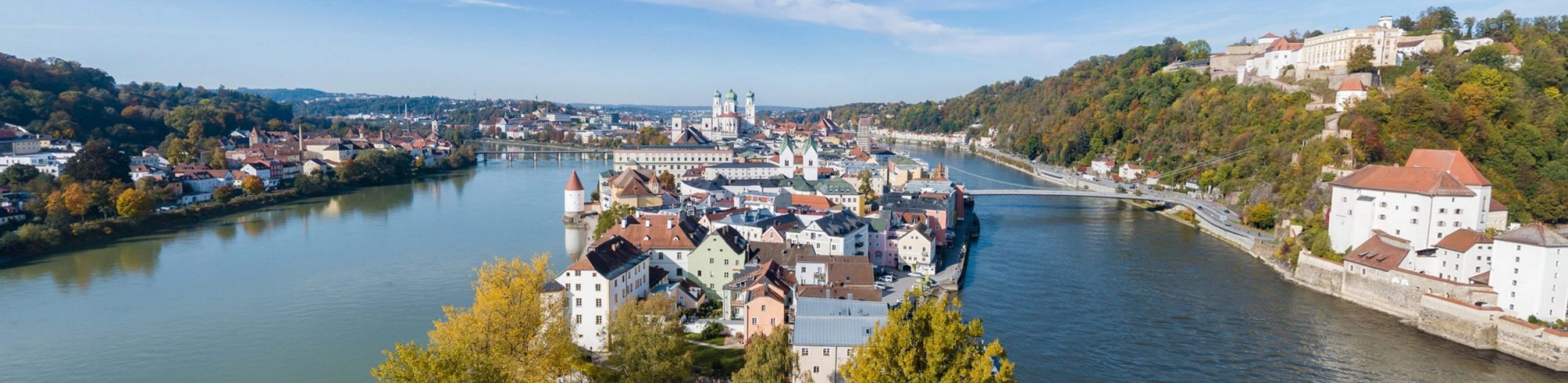
Thank you for the interview and we are looking forward to seeing you in Passau!